Care for the carpets and seating people use every day
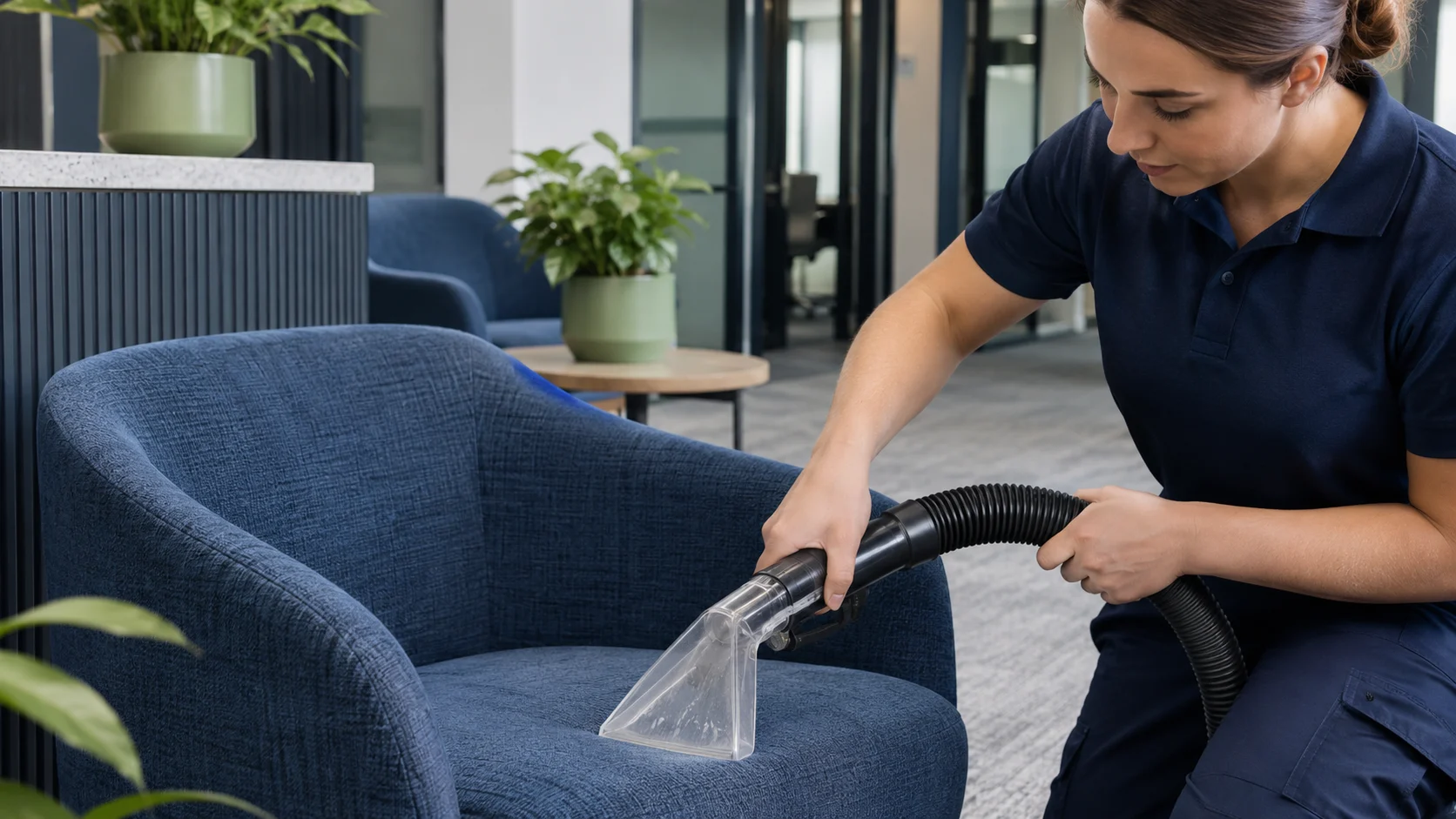
Sanitra cleans suitable commercial carpets and upholstered seating with care for both appearance and the material. We plan the method and drying arrangements around your offices, waiting areas or shared residential spaces.
- All staff DBS checked
- All staff trained
- Public liability insurance
- Specialist cleaning equipment
Give busy textile areas individual attention
Entrance routes, frequently used chairs and the area around meeting tables often receive different levels of wear. A useful plan records those differences and identifies which carpets or seats need attention. It also helps distinguish removable soil from worn fibres, damaged backing or a permanent change in colour.
For a practice or nursery, the setting’s policy may influence which furnishings are suitable and how they should be maintained. A cleaning enquiry can support that conversation, while decisions about replacing unsuitable or damaged furniture remain with the premises team.
Our staff are trained and DBS checked, and Sanitra holds public liability insurance. We use specialist cleaning equipment suited to the task, with methods and responsibilities agreed around your premises.

Choose a method the material can tolerate
Check care labels and manufacturer guidance before deciding how a textile should be cleaned. Fibre type, colour stability, backing, fixings and previous treatments can all affect suitability. Any sample test should be assessed after it has dried.
Spray extraction is one possible method for compatible textiles. It applies cleaning solution and recovers liquid carrying loosened soil. Other materials or circumstances may call for another approach. Kärcher’s manufacturer guidance explains why moisture tolerance and colourfastness need checking.
Sources
- Carpet and upholstery cleaners, Kärcher UK
A realistic plan includes drying
Room temperature, ventilation, textile construction and the selected method influence drying. It is useful to agree which spaces can be taken out of use, where furniture will be placed and when the area needs to reopen. An exact drying promise should only follow a suitable assessment.
Where carpet meets a hard floor, access arrangements need particular care while the textile is damp. Residents, patients and colleagues should know which routes remain available and whether seating is ready to use.
Build periodic care into the wider contract
Vacuuming, prompt attention to everyday marks and periodic cleaning serve different roles. A joined-up schedule lets you plan the more involved tasks before an important event, between room bookings or during a quieter period.
Tell us whether you are reviewing one room, a set of chairs or a larger building. Approximate area, photographs of the material and care-label details can help shape the next conversation. Sensitive records and identifiable people should be kept out of photographs.
What can be included
Commercial carpet cleaning
For suitable textile flooring in offices, waiting areas and shared corridors. The agreed method reflects the carpet construction, condition and available access window.
Examples for an agreed cleaning specification
- Agreed carpeted areas and traffic routes
- Suitability checks and method selection
- Planned drying and reopening
Upholstered seating cleaning
For suitable fabric seating used by visitors or staff. Each material needs a compatible approach, with realistic expectations for existing marks and wear.
Examples for an agreed cleaning specification
- Identified chairs and soft furnishings
- Care-label and colourfastness checks
- Drying and return-to-use arrangements
Main service areas: Aldridge and Walsall. For premises further afield, send us your postcode to check availability. See areas we cover
Questions we're often asked
- Can all stains be removed?
- Results depend on the cause, age and type of mark and the condition of the material. Some staining and damage remain after cleaning. Expectations should be agreed before treatment.
- Can you clean every type of seating?
- The fabric, filling, backing and manufacturer instructions need to be considered. Some items require a specialist method or may be unsuitable for the proposed treatment.
- How frequently should carpets be cleaned?
- Foot traffic, visible condition, maintenance instructions and the setting’s requirements help determine an appropriate schedule. There is no single interval that suits every building.
- Is carpet cleaning the same as disinfecting?
- The processes have different purposes. A textile cleaning method should not be described as disinfection unless the specific treatment, material and intended outcome support that claim.
Explore related pages
Plan textile care around your building
Tell us about your premises and the cleaning you would like to arrange. We’ll talk through the work, your preferred visit times and the next step.