What to include in a veterinary premises cleaning plan
Bring together the practice's clinical procedures, animal needs and cleaning contract responsibilities.
By Sanitra4 minute readSources checked 24 November 2026
A veterinary premises cleaning plan should identify the areas included, the people responsible and the procedures approved by the practice. Product selection also needs to consider the intended use and its effect on animal health. APHA guidance for a specific veterinary infection risk emphasises manufacturer instructions, chemical hazards and animal-health considerations. These decisions belong within the practice's assessment and clinical oversight. APHA veterinary guidance
Give visible cleanliness a practical purpose
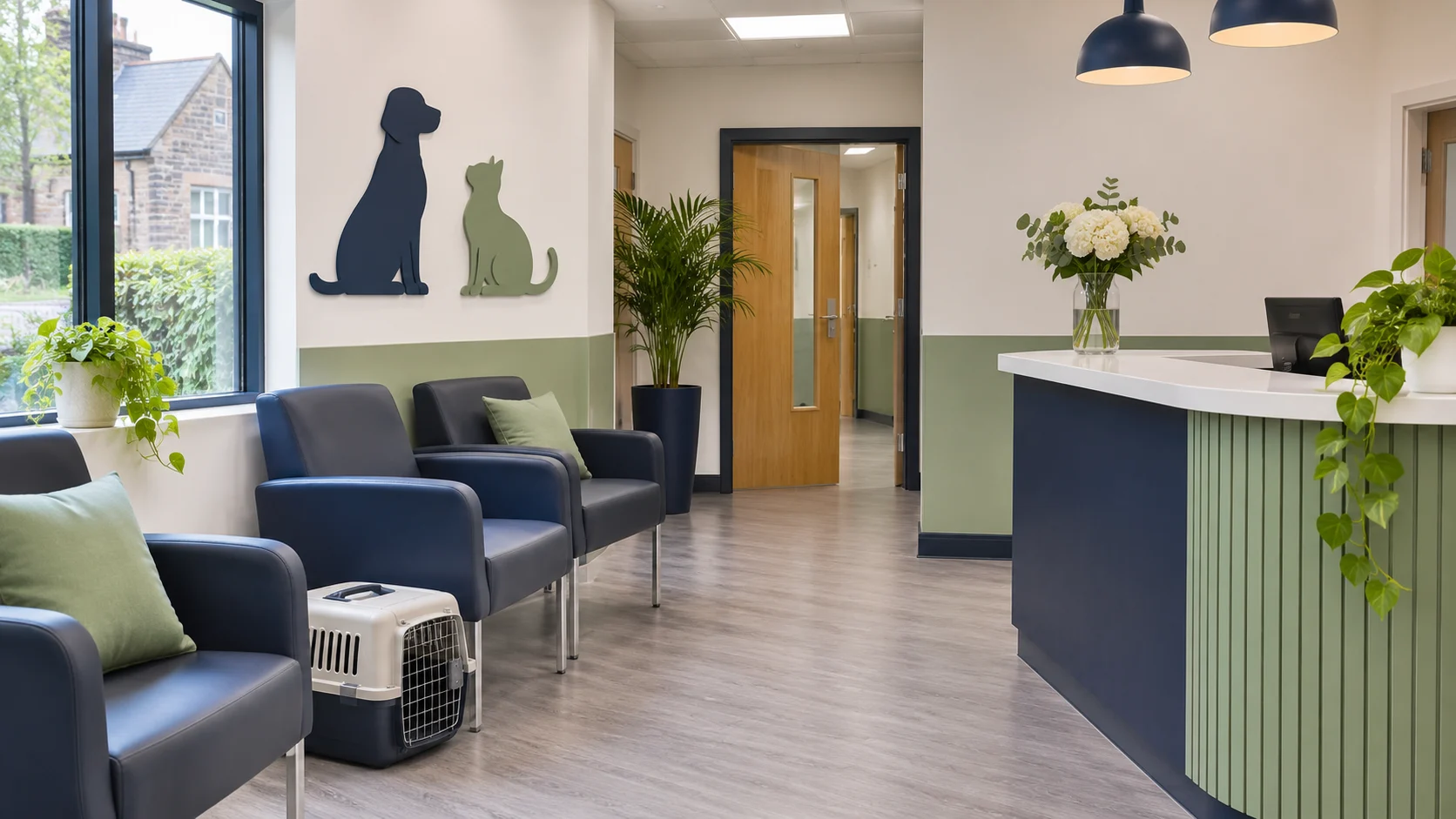
A cared-for waiting area welcomes owners, while an agreed cleaning routine helps the team manage the shared premises. In veterinary settings, appropriate cleaning and disinfection also contribute to controlling exposure to biological agents. The practice's assessment should determine what that means for each area. APHA veterinary guidance
Map the different spaces
Begin with a plan of the building. Reception, waiting areas, offices, washrooms, consultation rooms and animal accommodation need to be identified individually. Include every proposed area of contractor access, together with any restrictions.
Ask the practice team to describe how rooms are used throughout the day. A room that looks empty during a survey may be needed during an emergency appointment or late discharge. Recording these details helps you agree a workable cleaning sequence and a realistic handover.
Let the practice lead on clinical procedures
RCVS Knowledge provides infection-control and biosecurity resources for veterinary teams, including guidance on isolation and deep cleaning. Its hosted CVS resource is dated March 2020 and should be considered alongside current practice protocols and any relevant disease-specific guidance. RCVS Knowledge resource
A cleaning contract should explain how the practice's requirements are communicated and authorised. Identify the person who can approve the working method and any change to it. Set out what happens when an area is temporarily restricted or a different infection-control arrangement applies.
Make instrument processing, treatment equipment, sharps, clinical waste and animal handling explicit in the responsibility schedule. Confirm the tasks included in the environmental-cleaning proposal and the tasks allocated to the practice or another specialist provider.
Discuss products in the context of your animals
Ask which products are proposed and who will check their suitability for the intended areas, species, surfaces and practice procedures. The discussion should cover preparation, application, contact time, any rinsing requirements and when the area can be used again.
Avoid leaving a general phrase such as animal-friendly to carry the whole specification. Request the actual product information and a written site method approved through the appropriate practice process. If your practice has existing restrictions, share them before a quotation is finalised.
The same approach applies to new materials or refurbished rooms. Provide any manufacturer care information for flooring, wall finishes, seating and fixtures so the proposed method can be assessed against the premises.
Agree access around patients and staff
An animal-care setting needs a clear understanding of who controls doors, gates and restricted spaces. Decide how cleaning staff will sign in, obtain access and report an issue. Explain where staff, clients and animals may be present during the visit.
Discuss the location of equipment, chemical storage and any temporary restrictions required while work is underway. The contractor's plan should fit the building's established security arrangements. Put key instructions in the handover record so they are available whenever the staffing or timetable changes.
Make checks specific and useful
Choose a manageable list of agreed checks for the contract. Each check should relate to a task the contractor has been asked to carry out. A note such as an accessible reception surface left visibly marked is easier to investigate than a broad statement that the whole building needs attention.
Record when the concern was found, whether the space had been used since cleaning and what action was agreed. Review recurring access problems or specification gaps as well as individual defects. This helps keep the discussion practical and fair to both teams.
Common questions
Can general cleaning cover isolation areas?
Any proposed work in an isolation area needs specific assessment, authorisation, appropriate competence and a defined method. Discuss the requirement with the practice's clinical lead before including it in the contract. Confirm the provider's capability for the actual task.
How do we know whether a product is suitable?
Ask for the product information and proposed method, then have these considered through the practice's approval process. Explain the animals and materials involved. A broad marketing description provides less detail than the actual instructions for the intended use.
Should animal areas be on the same schedule as reception?
They can appear within one overall cleaning plan while retaining their own tasks, controls and responsible team. Clear area names and responsibilities make it easier to see what the contractor covers and what the practice manages separately.
Discuss your veterinary premises
Share your building layout, existing cleaning arrangements and relevant practice procedures with Sanitra. Start with the agreed areas and the approvals needed for a suitable contract proposal. [Enquire about veterinary premises cleaning](/contact)
Sources and further reading
Sources from NHS England, CQC and UKHSA relate to England where specified. Apply the requirements and local policies relevant to your premises.
References
- Brucella canis risks and control measures in veterinary practices, APHA and Defra
- Infection control and biosecurity guidance, last updated March 2020, RCVS Knowledge, hosting CVS guidance
Related pages
Tell us about your premises
Share your building and priorities, and we can discuss the cleaning contract you have in mind.