The practical benefits of a well-planned office cleaning contract
Keep shared areas presentable and responsibilities clear with cleaning built around the way your office operates.
By Sanitra4 minute readSources checked 24 November 2026
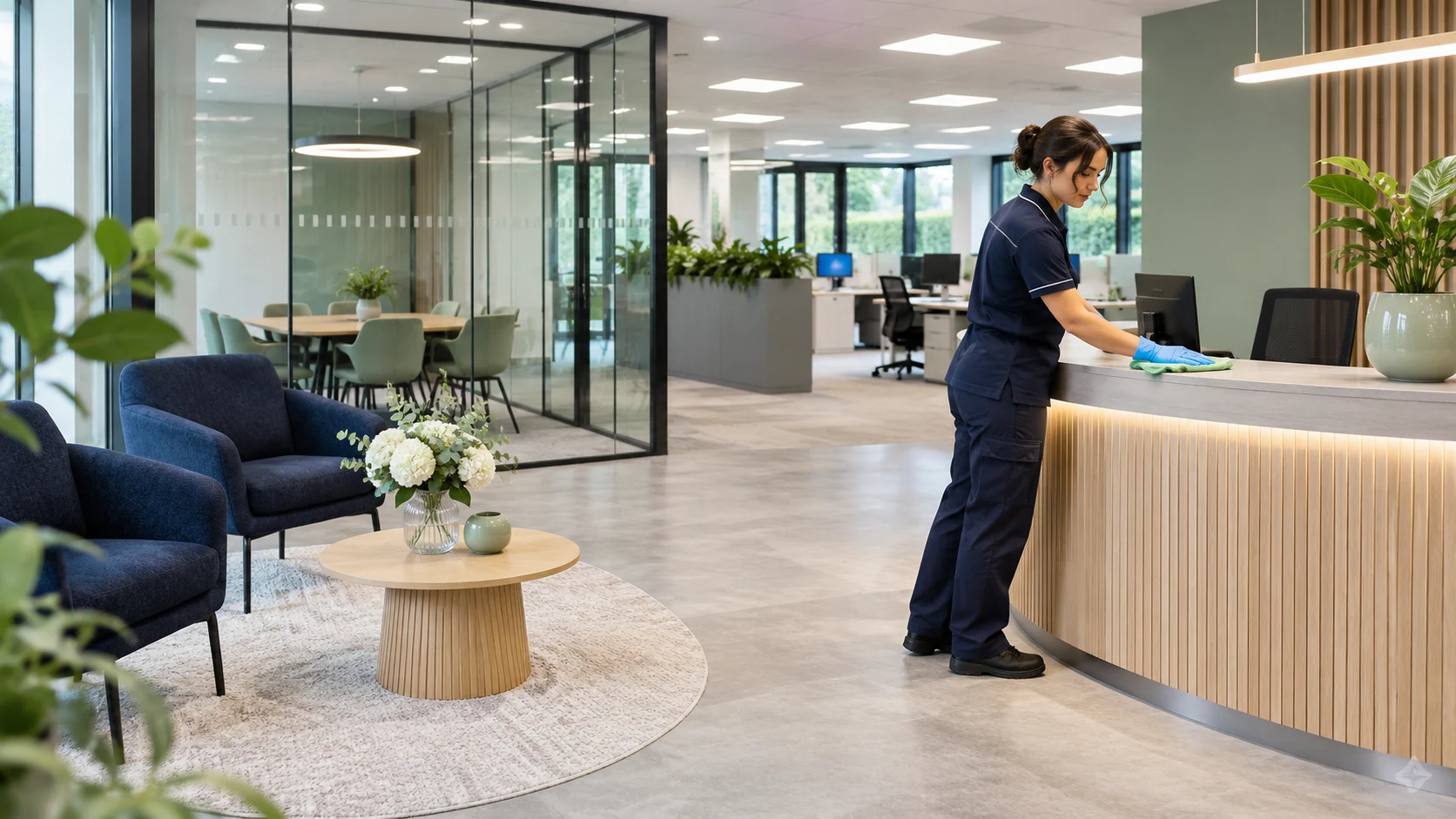
A well-planned office cleaning contract gives a business a clear standard for its shared spaces, a schedule for the agreed work and a route for dealing with concerns. The practical benefits are easier to see when you define what matters in your building, such as a presentable reception, usable meeting rooms, cared-for floors and clear washroom responsibilities.
Give visitors a considered welcome
Your entrance and reception are often the first areas a visitor experiences. Think about what they see on arrival, including door glazing, reception furniture, flooring and the route to a meeting room. Put the relevant tasks into the specification so the expected presentation is understood.
An office with frequent client meetings may prioritise these areas differently from a largely remote team using the building twice a week. Explain the pattern to your contractor and agree how the schedule responds to it. The strongest plan reflects the workplace you actually run.
Make shared facilities straightforward to manage
HSE's workplace guidance addresses clean premises, furniture and fittings, waste arrangements and welfare facilities such as toilets and hand basins. These provide a useful starting point when considering the building's everyday needs. HSE workplace guidance
Within your contract, describe the tasks for kitchens, breakout areas, washrooms and meeting rooms. Agree who orders consumables and who replenishes them. If staff clear their own desks or wash their own mugs, make those arrangements clear internally and to the contractor.
Responsibility becomes easier to track when the schedule uses the same names your staff use. A simple reference to the second-floor kitchen is more helpful than a broad heading covering all welfare areas without any detail.
Fit cleaning around working patterns
Hybrid working can change the busiest days and the rooms that see the most use. Ask teams about regular meeting days, visitor events and late working before setting the timetable. Decide which areas can be cleaned while people are present and which need another access window.
Discuss secure rooms, alarms, keys and the process for signing in and out. Identify the person who can resolve an access issue during the visit. These arrangements can be included in the handover so a timetable change does not depend on a string of last-minute messages.
Agree how desks and information are handled
Professional-services offices may contain confidential documents, personal belongings and specialist equipment. Give the contractor a clear instruction about what can be moved, which surfaces should be left untouched and who handles restricted items.
A useful desk policy explains what employees should clear before cleaning and how a team reports an inaccessible area. It can also identify who approves work around screens, keyboards and other equipment. Keep the cleaning method consistent with the relevant care instructions and the business's information-handling arrangements.
Look after the floors as part of the plan
Discuss entrance matting, carpeted routes, hard floors and stairs separately. Ask which routine tasks are included and how periodic floor care would be assessed and authorised. This makes it easier to budget for the agreed scope and compare proposals on similar terms.
HSE identifies wet floors and cables as potential cleaning hazards. Agree how access will be managed. HSE cleaning guidance
Review results without creating extra administration
Choose a few checks that matter to your workplace and agree how findings will be recorded. A regular review can consider repeated concerns, changes to occupancy and tasks that have become difficult to complete.
Ask for actions with named ownership and a sensible follow-up point. The aim is a manageable conversation about the agreed service. It should help the facilities contact distinguish a missed task, an access problem and an additional requirement that needs a separate decision.
Common questions
How often should an office be cleaned?
Discuss occupancy, visitor traffic, activities and the condition of each area. The right schedule may use different frequencies across the building. Agree the plan after the contractor has enough information to assess the work.
Can cleaning take place outside office hours?
Ask about availability for your required times and agree security, access and lone-working arrangements where relevant. Record the approved window and who to contact if staff are still present when the visit begins.
What makes quotations easier to compare?
Give providers the same room list, task schedule and access information. Ask them to identify exclusions, consumables, periodic work and the process for changes. A shared brief makes differences in the proposed service easier to understand.
Discuss your workplace
Share your office layout, working pattern and priorities with Sanitra. An initial enquiry can focus on the areas you need covered and the contract arrangements that suit your team. [Enquire about office cleaning](/contact)
Sources and further reading
Sources from NHS England, CQC and UKHSA relate to England where specified. Apply the requirements and local policies relevant to your premises.
References
Related pages
Tell us about your premises
Share your building and priorities, and we can discuss the cleaning contract you have in mind.