When machine floor cleaning can make a difference
A practical guide to choosing floor cleaning methods, equipment and products for a busy commercial building.
By Sanitra4 minute readSources checked 24 November 2026
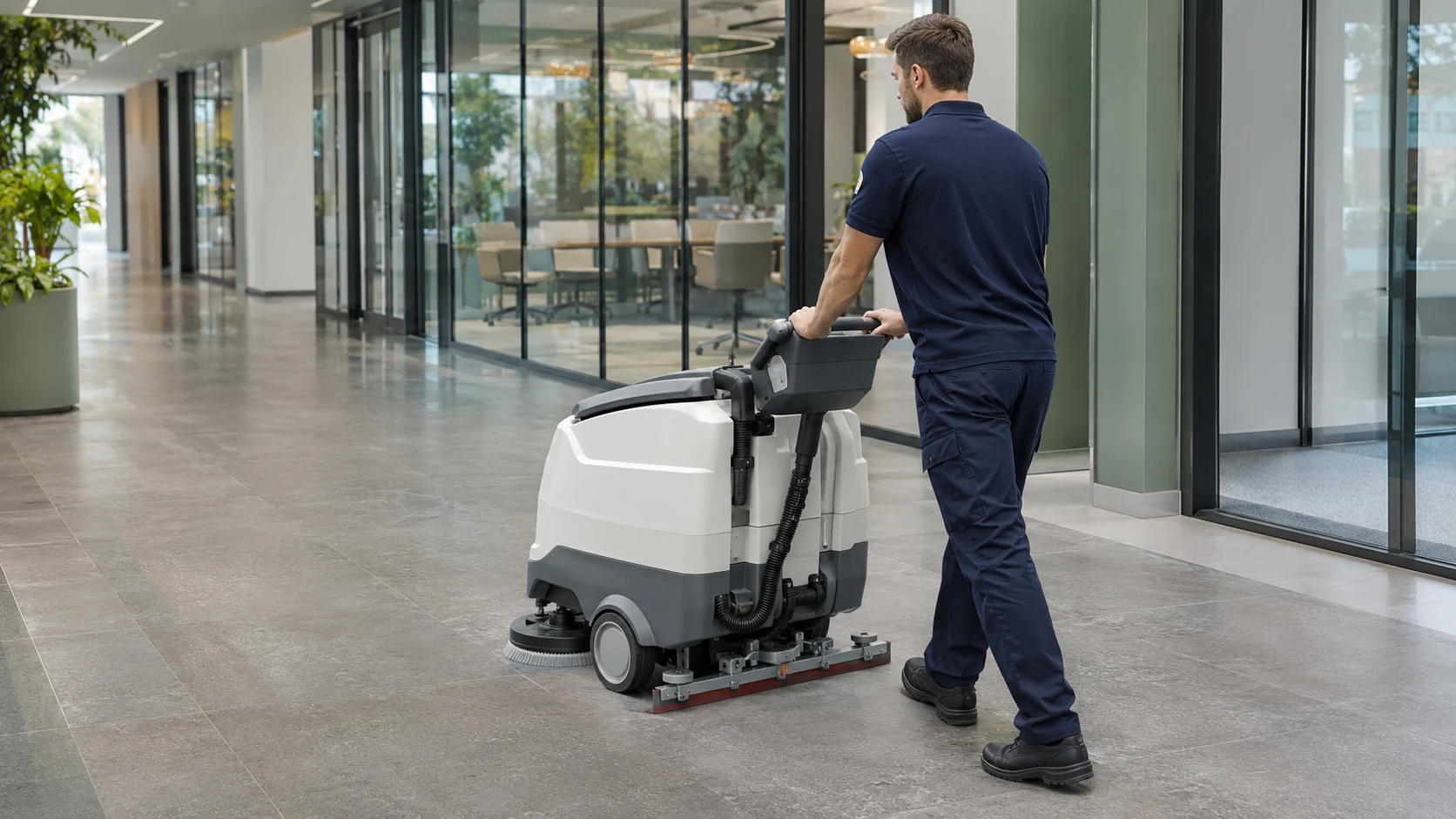
Kärcher describes scrubber-driers for suitable routine and deeper floor cleaning. Equipment selection depends on the material and task. Kärcher professional floor-cleaning guidance
For your building, begin with the floor covering, the condition you want to address and the time available. This gives the assessment a clear purpose.
What the machine contributes
A scrubber-drier uses brush action and cleaning solution to loosen soil, then collects dirty water in a recovery tank. Kärcher explanation of scrubber-driers
The practical benefit on a busy floor
For a building manager, mechanical agitation and recovery give the proposed floor clean a specific process to assess. Start with an observable concern, such as a dirty entrance route, then agree a small test area and an expected finish. Review the result after the area is ready for use, including the edges and thresholds that may need separate attention. This makes the discussion about the actual floor and the work achieved.
A clear plan also helps you book the right window. The proposal can identify which part is suitable for the machine, which details need another method and who checks the completed area. You gain a task you can schedule, compare and review.
Start with what the floor needs
An entrance may show tracked-in soil, a corridor may have stubborn marks and an office may have a carpeted route between desks. Put those areas on a simple floor plan before seeking a quotation. Add what you know about the covering, when it was installed and any care advice supplied with it.
Explain the result you are looking for in observable terms. You may want the entrance to look more consistent, an agreed deposit removed, or a periodic cleaning task brought into the contract. Ask the contractor to assess what is achievable, including marks or wear that cleaning may leave visible.
Choose equipment around the building
Machine suitability includes practical details. Measure doorways, note steps and lifts, identify water access and discuss where equipment could be used and stored. A spacious corridor and a small treatment room may need different approaches within the same building.
Ask how edges, corners, thresholds and areas beneath movable furniture will be dealt with. These are easy to overlook when a proposal concentrates on a large open floor. Request clarity on furniture movement and reinstatement, especially where staff will return immediately after the work.
The quotation should identify the proposed tasks and method clearly enough for you to compare it with another proposal. A list of machine brands gives limited help unless it is connected to the actual job.
Match products and mechanical action to the surface
Kärcher describes different brush systems for different floor-cleaning needs. Match the proposal to the actual surface. Kärcher floor-cleaning equipment guidance
Ask for an explanation of the proposed product, any test area and the expected finish. If you have a manufacturer's maintenance document or warranty information, share it early. It is easier to resolve a suitability question before the cleaning date than when a team is ready to begin.
Plan for people using the space
HSE recommends a suitable cleaning method and controlled access to wet or drying floors. HSE floor-cleaning guidance
For your building, turn that into an agreed sequence. Identify which routes need to remain usable, where temporary restrictions can be introduced and who communicates with occupants. Consider visitors arriving early, residents returning during the day and staff who work beyond normal office hours.
Confirm who checks the area before normal access resumes. Avoid booking a meeting, appointment or resident event on the assumption that every surface will be ready at a particular time before the contractor has assessed the method and conditions.
Connect periodic work with routine care
A useful contract explains how everyday floor cleaning and periodic attention fit together. Record which tasks are covered by the regular price, which need separate approval and when the schedule will be reviewed.
Keep notes about recurring marks or areas that are difficult to access. Photos taken with permission can help both parties discuss the same issue. They can also distinguish a cleaning concern from a repair or maintenance item that needs a different decision.
Common questions
Should every commercial floor be machine cleaned?
Ask for a site assessment. Size, construction, surface finish, access and the proposed result all influence the method. A building can reasonably have several cleaning approaches across its rooms and routes.
Can machine cleaning remove every mark?
Ask the contractor to distinguish removable soiling from wear, staining or surface damage. Agree realistic expectations and any test area before authorising the work, particularly on older floors or finishes with an uncertain history.
What should the quotation include?
Look for the areas and approximate extent of work, proposed process, access needs, furniture arrangements, drying considerations and any exclusions. It should also explain how findings or changes will be discussed before extra work proceeds.
Talk through your floor-care requirements
Tell Sanitra which areas need attention and share any available floor-care information. The enquiry can establish the assessment and scope needed for your building. [Discuss floor cleaning](/contact)
Sources and further reading
Sources from NHS England, CQC and UKHSA relate to England where specified. Apply the requirements and local policies relevant to your premises.
References
Related pages
Tell us about your premises
Share your building and priorities, and we can discuss the cleaning contract you have in mind.