
A clear cleaning contract for communal areas in apartment blocks
Plan entrances, stairs, corridors and shared facilities with an agreed scope that residents and managers can understand.
By Sanitra4 minute readSources checked 24 November 2026
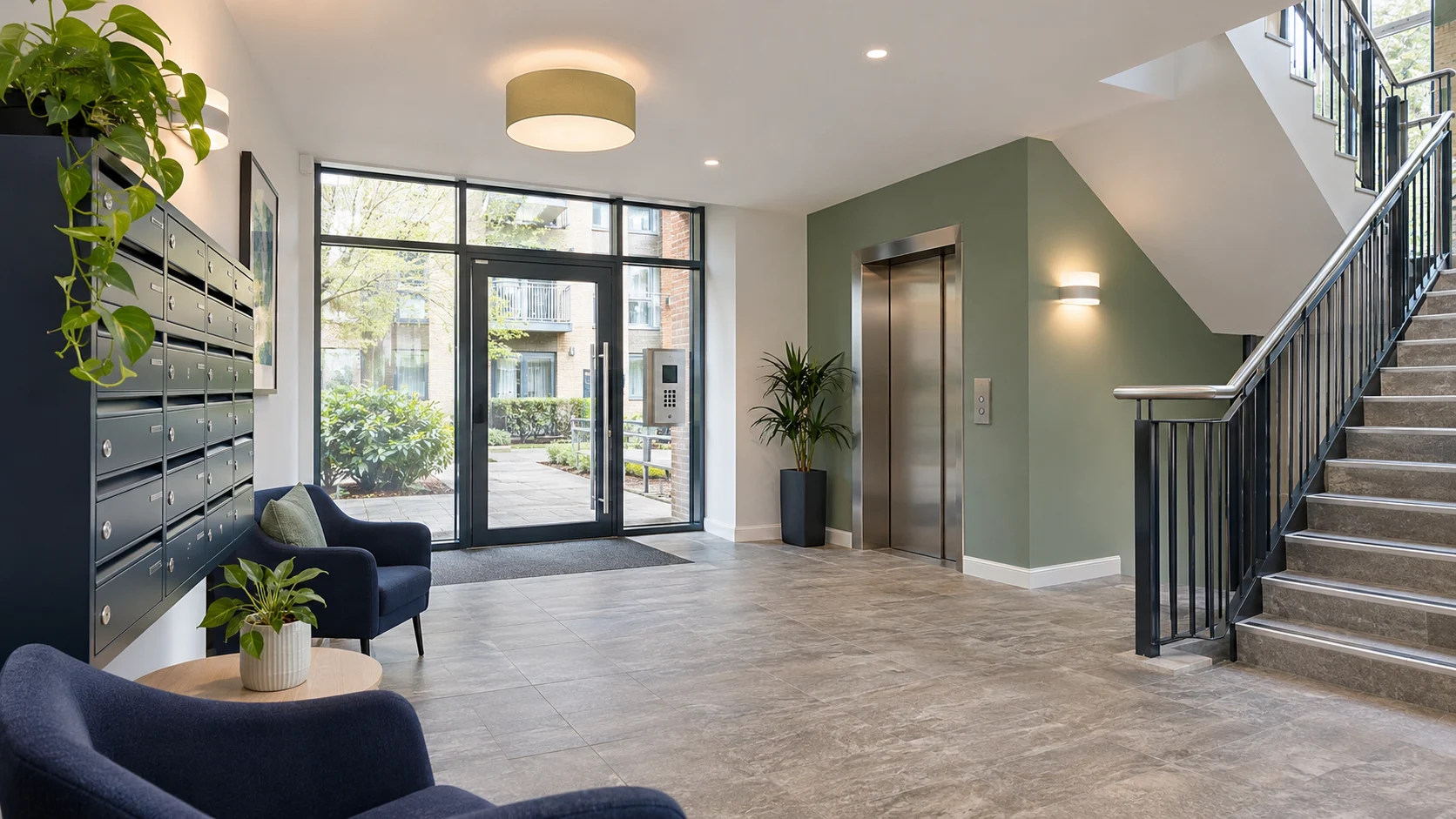
A communal-area cleaning contract should identify the shared parts included, the tasks and frequencies, access arrangements and the person authorised to approve changes. For managing agents, residents' management companies and shared freehold developments, that clarity makes the work easier to explain, compare and review across the building.
Give shared spaces consistent care
The communal entrance is part of residents' everyday experience of home. Regular attention to the agreed areas can keep visible litter, tracked-in dirt and marks from becoming a recurring management concern. A defined schedule also gives residents a clear expectation of the service, making it easier to raise a specific issue and understand what action has been agreed.
Define the common parts carefully
Begin with the areas covered by the proposed contract. Entrance halls, stairs, landings, corridors, lift interiors and shared internal glazing may all need separate entries. Record any additional spaces you want assessed, such as a designated bin-store floor or a shared amenity room.
Clarify the limits of the work. A contract for shared internal areas should identify whether external approaches, private apartments, high-level glazing or waste handling are included. Use a site plan or labelled photographs where these boundaries are difficult to describe.
This is particularly useful when several entrances or buildings share a development name. The quotation should make clear which blocks and floors have been assessed so the committee or managing agent can see exactly what is being proposed.
Choose a schedule around actual use
Think about the routes that receive the most traffic and the times residents commonly enter and leave. A ground-floor entrance may need a different pattern of attention from a quiet upper landing. Deliveries, move-ins and building works can also create temporary changes to the site's needs.
Agree a routine schedule and a separate process for requesting additional work. This gives the contractor a clear instruction and lets the authorised contact decide when an extra visit or task is justified. Record who can make that decision so residents receive a consistent response.
Plan access and resident movement
Discuss keys, fobs, entry systems and the process for signing in where applicable. Agree how contractors enter securely, where equipment is placed and who is contacted if a door or access device fails. Avoid relying on a particular resident being available to let the team in.
HSE recommends controlling access to wet floors and considering a dry pedestrian route when cleaning in sections. HSE cleaning guidance
Ask how planned work will be communicated when it affects a regularly used route. A clear notice from the managing contact can explain the area, timing and temporary arrangements without creating uncertainty for residents.
Record what is cleaned and what needs repair
A cleaning visit may reveal issues such as a damaged surface, a leaking fitting or a door that does not close properly. Agree a reporting route for observations relevant to the work, together with the person responsible for taking them forward.
Keep cleaning actions and building-maintenance actions identifiable within the review. If a mark is associated with worn flooring, for example, ask the contractor to explain the result that cleaning can reasonably achieve. This helps avoid repeated disputes over an item that needs a different intervention.
Keep quality checks visible and proportionate
Set a small number of practical checks for each area. These might concern visible debris on an agreed floor, marks on included internal glazing or the presentation of a specified handrail. Match the checks to the actual tasks in the contract.
Agree who reviews concerns and what information is helpful. The date, location and a photograph taken with appropriate permission can make an issue easier to investigate. Include whether the area has been used since the visit and record the follow-up agreed with the contractor.
Make the contract easy to explain
Provide the decision-makers with a concise summary of the areas, routine visits, periodic tasks, exclusions and change process. Keep pricing connected to that schedule. When proposals differ, ask each provider to identify the difference in scope so you can compare the work fairly.
Store the current schedule where the authorised managing contact can find it. If committee members or managing agents change, a clear record allows the arrangements to continue with less uncertainty.
Common questions
Does communal cleaning include private apartments?
The contract should state the exact boundaries. Cleaning within individual homes needs its own agreed scope and access arrangements. Keep the communal-area schedule clear so residents understand which spaces are covered.
Can residents request extra tasks directly?
Agree one route for requests and identify who can authorise additional work. This helps the contractor follow a consistent instruction and allows the managing contact to keep the schedule and costs under review.
How should we handle cleaning during building works?
Tell the contractor about the programme and the affected areas. Request an assessment of any temporary changes or additional work. Confirm access, responsibilities and approval before adding tasks to the existing contract.
Discuss your development
Tell Sanitra about the blocks, shared spaces and current arrangements you manage. A clear site list gives the contract discussion a practical starting point. [Enquire about communal-area cleaning](/contact)
Sources and further reading
Sources from NHS England, CQC and UKHSA relate to England where specified. Apply the requirements and local policies relevant to your premises.
References
Related pages
Tell us about your premises
Share your building and priorities, and we can discuss the cleaning contract you have in mind.